
Helping an aging parent choose between implants and dentures
By Kai Quinn · Updated 2026-07-10
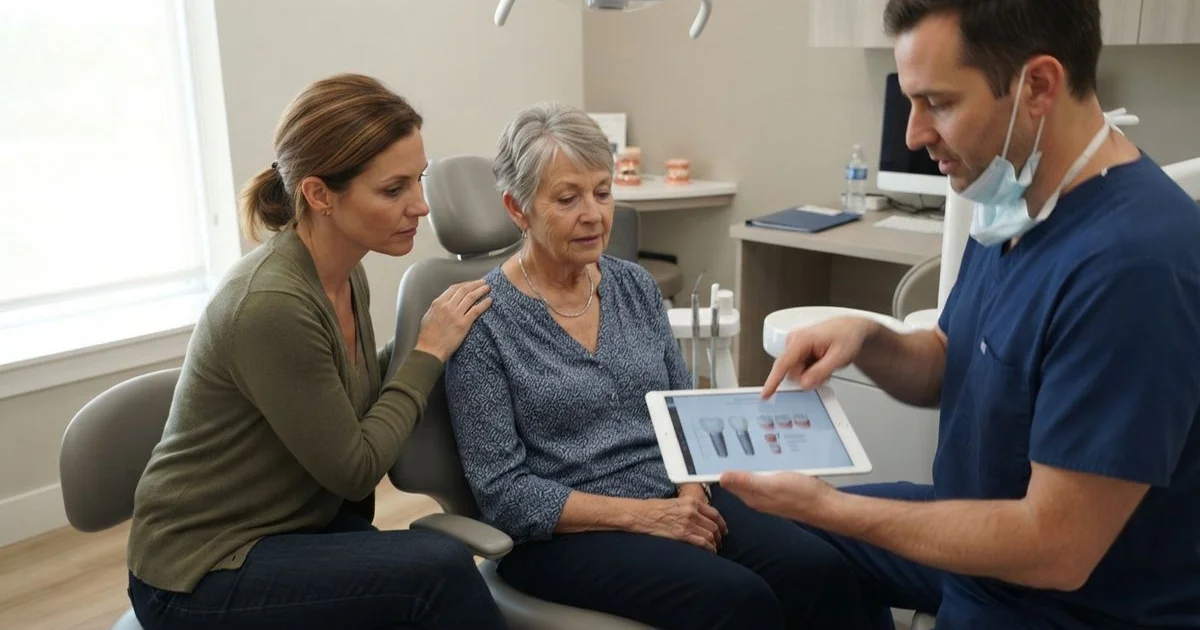
Watching a parent struggle with loose or uncomfortable dentures is one of those situations where you want to help but aren’t sure how far to push. Implant-supported dentures can genuinely improve quality of life for an older adult, but the decision involves surgery, cost, and a recovery period, so it’s worth understanding the tradeoffs before bringing it up. Here’s a practical look at implant-supported dentures for families in Chicago navigating this together.
Why this comes up so often with aging parents
Bone loss accelerates with age and long-term denture wear, which is part of why dentures that fit well at 65 can feel loose and uncomfortable a decade later. Sunken cheeks, difficulty eating certain foods, and sore spots from an ill-fitting denture are common complaints that implant-supported dentures can address, since the denture snaps or attaches to implants rather than resting loosely on the gums.
What actually differs between the two options
Traditional dentures rest on the gum ridge and rely on suction or adhesive to stay in place, which can loosen further as bone continues to change shape over time. Implant-supported dentures attach to two or more implants anchored in the jawbone, giving much more stability for chewing and speaking. The tradeoff is that implant placement requires surgery and a healing period, plus a higher upfront cost than a standard denture reline or replacement.
| Factor | Traditional denture | Implant-supported denture |
|---|---|---|
| Stability while eating/speaking | Can shift or loosen | Anchored, much more stable |
| Surgery required | No | Yes |
| Upfront cost | Lower | Higher |
| Bone preservation | Bone continues to shrink over time | Implants help preserve jawbone |
| Adjustment period | Shorter | Longer, includes healing time |
Cost conversations families tend to avoid
Money is often the harder topic to bring up than the medical side. Some adult children want to help cover part of the cost but aren’t sure how to offer without it feeling like it undermines their parent’s independence. Framing it as a shared family decision, rather than charity, tends to land better, and many practices are used to having these joint conversations and can present financing or payment options directly to both of you at the consultation.
Health factors that matter for older parents specifically
Osteoporosis, diabetes, and blood thinner medications are common in older adults and all come up in implant planning, but none of them automatically rule someone out. What matters is whether the provider coordinates properly with your parent’s physician, especially around timing surgery relative to certain medications. Bring a full medication list to the consultation, and don’t hesitate to ask the implant provider to loop in your parent’s primary doctor if needed.

The recovery question families worry about most
A common concern is whether an older parent can handle the surgery and recovery itself. In practice, the procedure to place implants for a denture is usually shorter and less involved than a full-arch case, since it typically requires only two to four implants rather than a full set replacing every tooth. Most patients manage recovery with over-the-counter or prescribed pain relief and a few days of rest. The bigger factor is usually how quickly gum and bone tissue heal, which slows somewhat with age but rarely rules out the procedure on its own. A thorough pre-surgical health screening is what actually determines readiness, not age as a number.
Making the conversation easier
Parents sometimes resist bringing up dental issues because they assume nothing can be done or worry about cost being a burden on the family. Starting from what they’ve mentioned struggling with, rather than suggesting a specific procedure, usually opens the conversation more naturally. Offering to attend the consultation with them, take notes, and help sort through financing options can also lower the barrier to actually booking that first appointment.
This is general information, not medical advice for your parent’s specific health situation, which should be evaluated directly by a provider in coordination with their physician if needed. Our methodology explains how we evaluate providers on patient care and communication, and the Chicago, IL Dental Implants Provider Guide can help you find a practice that takes time with older patients and their families.
Common questions
- Is my parent too old to get dental implants?
- Age alone rarely disqualifies someone. What matters more is bone density, overall health, and whether they can tolerate the surgery and healing process. Many people in their 70s and 80s get implants successfully.
- What if my parent has osteoporosis or is on blood thinners?
- These don't automatically rule out implants, but they need to be discussed directly with the provider, who may coordinate with your parent's physician on timing and medication adjustments around surgery.
- Are implant-supported dentures easier for an elderly parent than regular dentures?
- Many patients find implant-supported dentures more stable and comfortable since they don't shift while eating or speaking the way a removable denture can, but they involve surgery, which not every parent wants to go through.
- How do I bring this up without it feeling like I'm pushing them?
- Framing it around what they've told you bothers them, loose dentures, difficulty eating certain foods, self-consciousness, tends to go over better than framing it as something they should do.